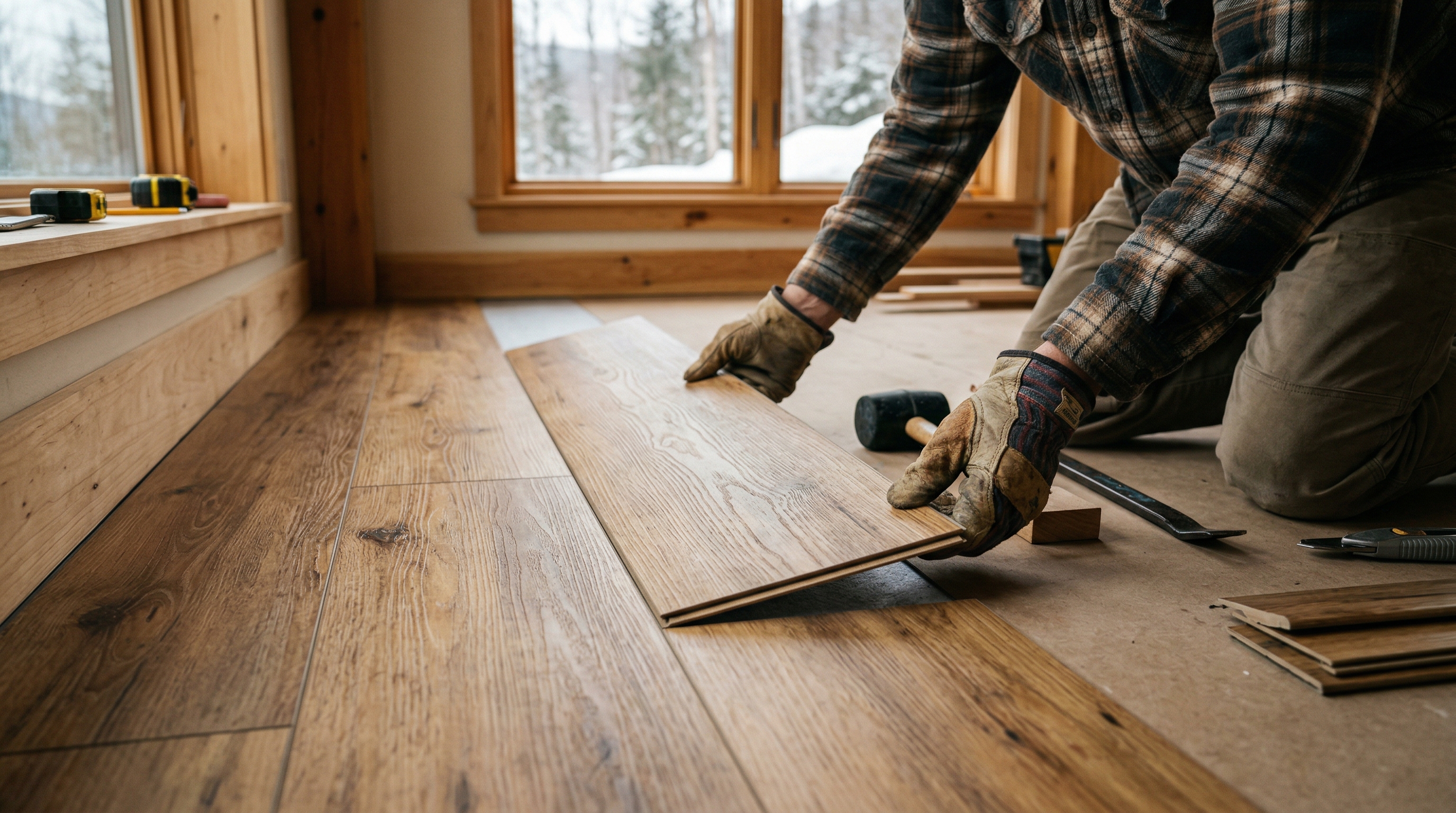
A homeowner in Brandon called us last spring about refinishing her hardwood floors. They were original to the house: red oak, probably 60 years old. Beautiful wood. But the mudroom entry had been destroyed. Decades of Vermont boot traffic, road salt, snowmelt, and dog nails had worn through the finish and into the wood grain. The rest of the house looked great. That mudroom needed a different solution.
We pulled the damaged hardwood, put down luxury vinyl plank in the mudroom and entryway, and refinished the oak in the living and dining rooms. Best of both worlds. That's usually the right answer, not one or the other everywhere, but the right material in the right room.
What Does Each Floor Actually Cost Installed?
Material cost is only part of the picture. Here's what you'll actually pay, installed, in the Rutland County area:
| Item | LVP | Hardwood |
|---|---|---|
| Material per sq ft | $3 - $7 | $6 - $14 |
| Labor per sq ft | $2 - $4 | $4 - $8 |
| Total installed per sq ft | $5 - $11 | $10 - $22 |
For a 500-square-foot living area, that's $2,500-$5,500 in LVP or $5,000-$11,000 in hardwood. The gap is significant. LVP also installs faster: most click-lock systems go down in a day for a standard room. Hardwood, especially nail-down on a subfloor, takes two to three times as long.
How Does Vermont's Climate Affect Each Floor?
This is the big one. Vermont homes deal with wild humidity swings: 30% relative humidity in winter when the woodstove is cranking, 70%+ in August. That cycle does things to flooring.
Hardwood expands and contracts with humidity changes. Gaps appear between boards in winter. Boards cup or buckle in humid summers if there's no vapor barrier or the basement is damp. Engineered hardwood handles this better than solid because the plywood core resists movement, but it still moves. You need to maintain 35-55% humidity year-round for solid hardwood to stay stable, and in Vermont that means running a humidifier in winter and a dehumidifier in summer.
LVP doesn't care about humidity. It's plastic and limestone. It won't swell, gap, cup, or buckle. This is why we put it in basements, mudrooms, kitchens, and bathrooms without hesitation. Try putting solid hardwood in a Vermont basement and you'll be pulling it up within two years.
Which Rooms Get Which Material?
Here's how we typically advise homeowners:
LVP makes sense in:
- Mudrooms and entryways: takes the abuse of boots, salt, water, and gravel
- Kitchens: handles spills and moisture without worry
- Bathrooms: water resistance is everything here
- Basements: the only reasonable choice over concrete
- Laundry rooms: for obvious reasons
- Rental properties: holds up to tenant turnover
Hardwood makes sense in:
- Living rooms: nothing matches the warmth and character of real wood
- Dining rooms: hardwood elevates the space
- Bedrooms: comfortable, quiet, ages beautifully
- Hallways connecting hardwood rooms: keeps the flow consistent
What About Resale Value?
Hardwood adds measurable value to a home sale. Real estate agents in the Rutland area consistently say hardwood floors are one of the top three features buyers ask about. You won't recoup the full cost, but you'll recoup more of it than almost any other renovation.
LVP is neutral to slightly positive. Buyers don't get excited about it, but they don't penalize you for it either, as long as it's quality product that looks good. Cheap LVP that's peeling at the edges or has obvious repeating patterns will turn buyers off.
Which Brands Do We Trust?
For LVP, we install a lot of COREtec and Shaw Floorte. Both have rigid core construction, attached underlayment, and realistic wood textures. We avoid the thin, flexible LVP, anything under 5mm thick feels cheap underfoot and dents easily. Budget $4-5 per square foot minimum on material to get something that'll hold up and look right.
For hardwood, we work with whatever the client prefers, but we recommend white oak over red oak for Vermont homes. White oak is harder, more water-resistant, and the grain pattern hides wear better. It's become the standard for good reason.
What About Rental Properties?
LVP. Every time. We've done flooring for several landlords in the Rutland area and the math isn't even close. LVP survives tenant turnover, pet damage, and deferred maintenance. A scratched LVP plank can be replaced individually in most click-lock systems. A scratched hardwood floor means refinishing the entire room.
The up-front savings let landlords floor an entire unit for what hardwood would cost in the living room alone. And when a tenant moves out, the floors clean up with a mop instead of a drum sander.
We've been installing both materials across Rutland County since 2009. If you're not sure what makes sense for your project, we'll come take a look and give you a straight recommendation. No pressure to pick the expensive option, just what'll work best for your home and how you use it.