Every year, same story. First hard freeze hits, usually mid-October around Rutland, and the phone starts ringing. Burst pipe in the garage. Cracked outdoor faucet. Plow driver took out the mailbox because no one marked the driveway edges. All of it preventable. All of it expensive.
We manage properties year-round for about two dozen clients in Rutland County. Here's the exact checklist we run through every fall. Month by month, so you can pace it out instead of scrambling the week before Thanksgiving.
What Should You Do in September?
September feels early, but this is when you handle the stuff that takes time or requires scheduling.
- Schedule your plow contract. Good plow operators fill up by mid-October. If you wait until the first snow to call around, you're getting whoever's left, and paying a premium. We start booking snow removal contracts September 1st and they're usually full by Columbus Day.
- Service your snowblower. Change the oil, replace the spark plug, check the shear pins and auger belt. Do it now when the hardware store has everything in stock. A $15 shear pin in September saves a $200 emergency service call in January.
- Aerate and overseed your lawn. September is prime time. Grass grows strong roots through fall and comes back thick in spring. This is your last chance to do lawn work before the ground freezes.
- Schedule a gutter cleaning. Leaves haven't all fallen yet, but get on someone's calendar. Clogged gutters cause ice dams, and ice dams cause leaks. It's a $150-$250 job that prevents thousands in water damage.
- Inspect your driveway and walkways. Cracks that let water in now will be potholes by spring. Fill asphalt cracks with cold patch. For concrete, use a flexible caulk rated for freeze-thaw.
What Should You Do in October?
This is the heavy-lifting month. Get this done before the first freeze and you're in good shape.
- Drain and disconnect all garden hoses. A frozen hose can crack the pipe behind the spigot inside your wall. We've seen $5,000 water damage from a $20 hose that didn't get disconnected. Drain them, coil them, put them in the garage.
- Shut off exterior water lines. Find the interior shut-off for your outdoor spigots and close them. Open the exterior valve to let any remaining water drain out.
- Cover your AC condenser. A plywood board on top to keep debris and ice off is fine. Don't wrap it completely in a tarp: that traps moisture and causes corrosion. Just protect the top.
- Clean gutters again once the leaves have fully dropped. This is the one that actually matters. Packed leaves plus freezing rain equals ice dams.
- Mark your driveway edges. Fiberglass markers, every 8-10 feet. If you have a gravel driveway, mark the edges AND any spots where the driveway narrows or curves. Your plow driver will thank you, and your lawn will survive the winter.
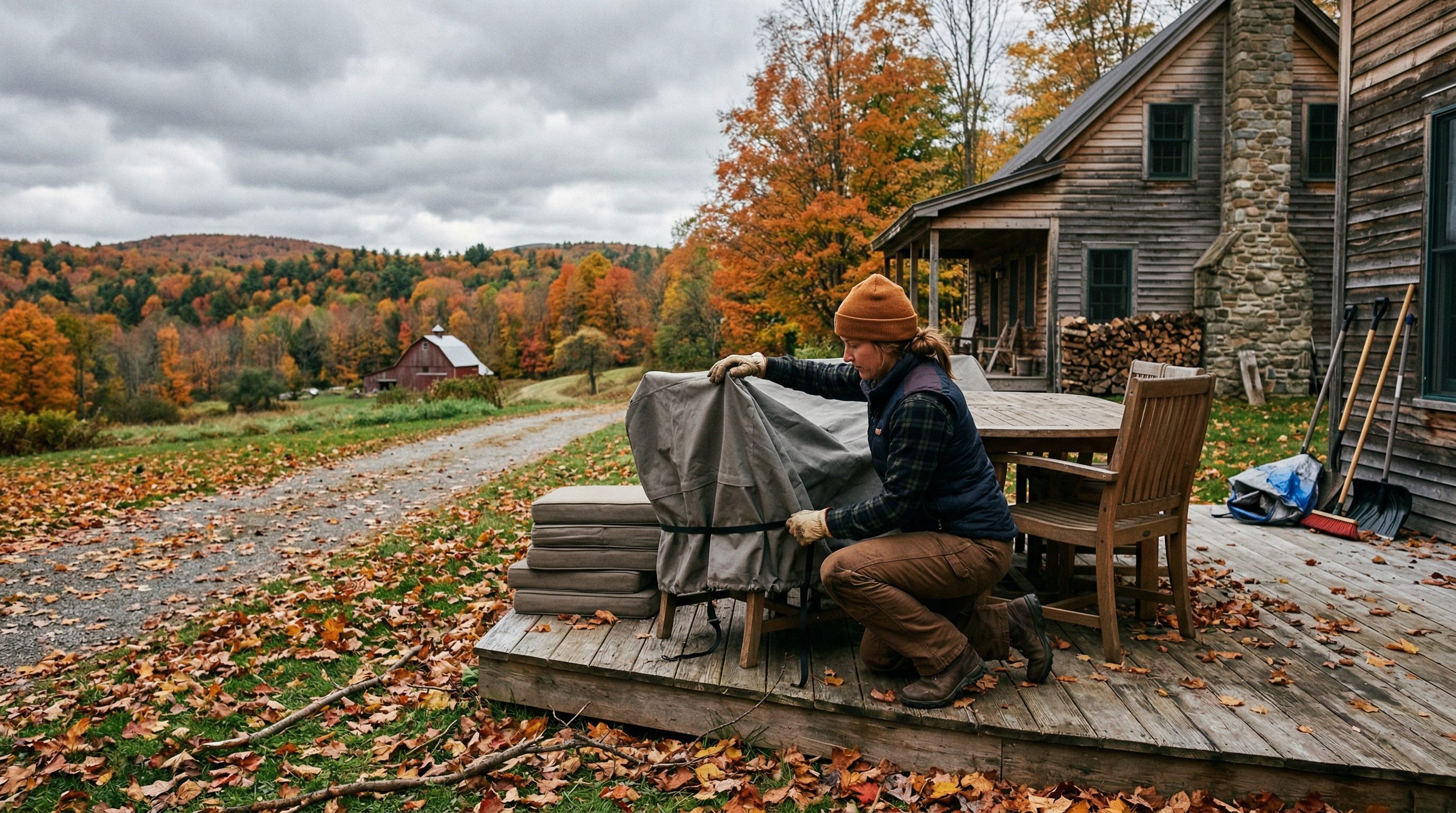
- Put away patio furniture. Either bring it inside or cover it. Leaving cushions out guarantees mildew. Metal furniture left on a patio will rust-stain the surface. Stack it in the garage or shed.
- Check weather stripping on all exterior doors. Worn stripping lets cold air in and drives your heating bill up. A $20 roll of weather stripping and ten minutes with a utility knife makes a noticeable difference.
What Should You Do in November?
Final details before winter locks in.
Final mow. Cut the lawn to about 2.5 inches. Leaving it too long invites snow mold. Too short and the roots are exposed. 2.5 inches is the sweet spot for Vermont.
Blow out your irrigation system. If you have in-ground sprinklers, they need to be winterized with compressed air. This is not optional: a single frozen sprinkler line can crack in multiple places and cost $500+ to repair in spring. Hire someone with a commercial compressor; a home-use compressor won't push enough volume.
Check your sump pump. Pour a bucket of water in the pit and make sure it kicks on. Test the backup battery if you have one. A failed sump pump during spring thaw is catastrophic.
Stock up on ice melt. Calcium chloride works down to -25 degrees and is easier on concrete than rock salt. Buy a few bags now. By January, stores run out after every storm.
Move snow shovels and roof rakes to an accessible spot. Not buried behind the lawnmower in the back of the shed.
Walk your property one last time. Look for anything that could become a problem under snow: low branches over walkways, loose steps, trip hazards on paths. Fix them now while you can still see them.
What Do We Do for Our Managed Properties?
Our full-service property care clients don't have to think about any of this. We run through this exact checklist starting the first week of September. By the time the first snow flies, their properties are buttoned up: hoses drained, markers set, gutters clean, plow routes confirmed.
We also set up a communication plan for winter. Our snow removal clients get a text the night before any storm with expected accumulation and our planned response time. No guessing, no waiting by the window wondering if anyone's coming.
What Are the Most Common (and Expensive) Mistakes?
In fifteen years of doing this, the same mistakes come up every winter:
- Not disconnecting hoses: easily the most common cause of burst pipes we see
- Skipping gutter cleaning: ice dams cause thousands in interior water damage
- No driveway markers: torn-up lawns, crushed landscaping, and hit mailboxes
- Waiting too long to book plowing: then scrambling after the first storm
- Ignoring the sump pump: it sits there all summer and fails when you need it most
Winter in Vermont doesn't sneak up on anyone. You know it's coming. The difference between a smooth winter and a disaster is two or three weekends of prep work spread over September through November. Do the list, do it early, and January is just cold, not expensive.
If you'd rather hand off the whole winterization process, that's what we're here for. We've been managing properties in Rutland County since 2009 and we know what breaks when you skip a step.