Who clears the snow at a rental is decided by the lease, not by custom. If the lease says the tenant shovels, the tenant shovels; if it says nothing, assume the owner is on the hook and get it in writing before the first storm. But the lease only settles who owes the work. Whether the walk actually gets cleared at 6 a.m. after eleven inches is decided by who is physically there with a shovel, and for a lot of Rutland County rentals and second homes, that is the part that goes wrong.
Updated October 2026.
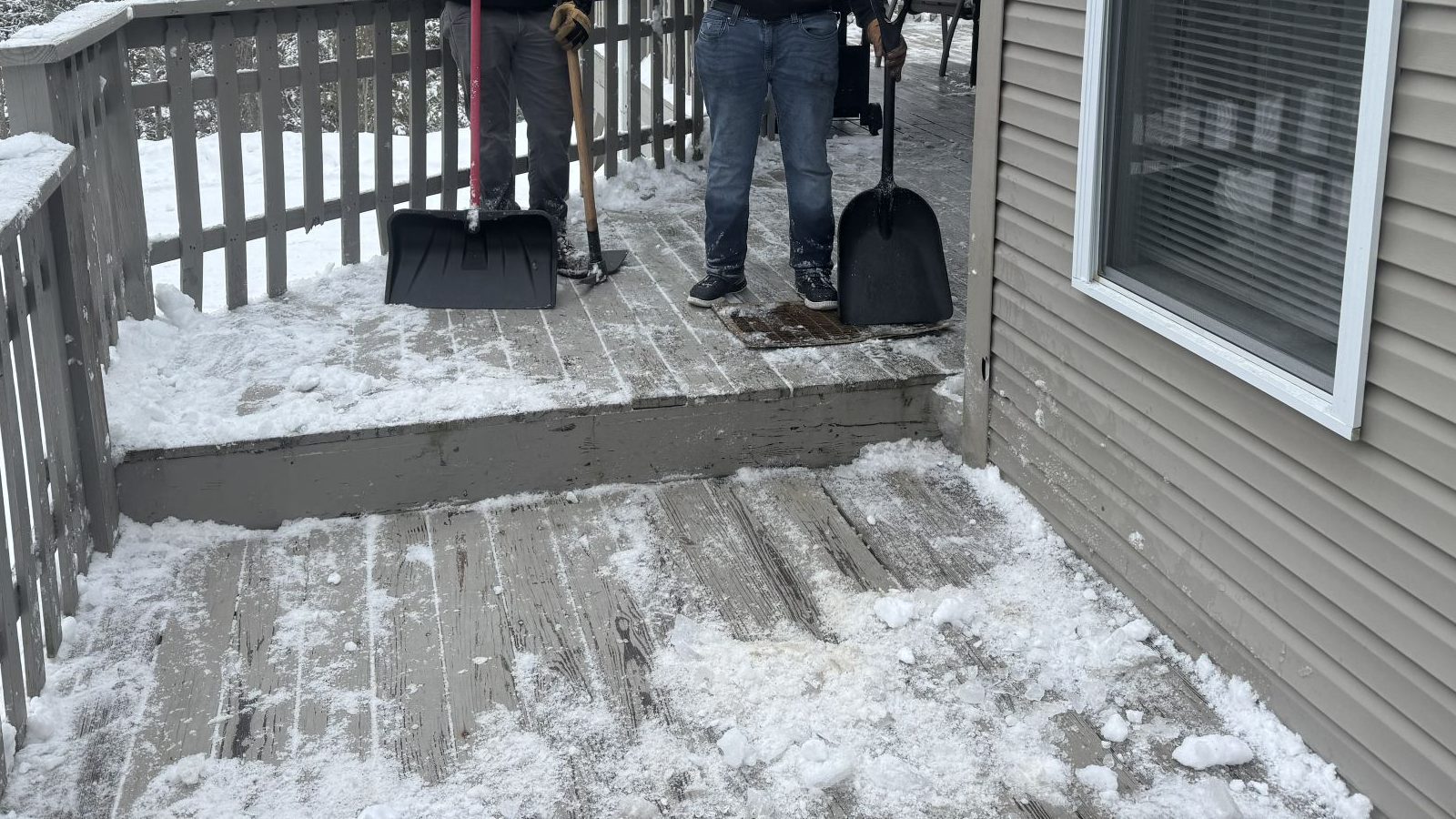
We hear this question every fall from landlords and second-home owners, and the advice online is almost always the same: change your lease. That is good advice as far as it goes. What it skips is the morning when the tenant is out of town, the guest arrives after dark, or the person who agreed to shovel just doesn't. The photo above is our crew after clearing the deck and steps at a hillside home. Nobody's lease cleared those stairs.
Single-family, multi-unit and the shared drive
A single-family rental is where handing snow to the tenant is most common, because the tenant controls the whole property. It works when the tenant is around all winter, owns a shovel and a bag of ice melt, and takes it seriously.
A multi-unit building is different. Shared walks, shared steps, a shared parking area: no single tenant controls them, and the owner usually keeps responsibility for common areas. If three tenants all assume one of the others will do it, nobody does.
A shared drive or a long rural approach is its own problem. A tenant with a shovel is not clearing a 300-foot Vermont driveway with a grade on it. That needs a plow, and somebody has to arrange it whatever the lease says about the front steps.
What a slip on the steps actually turns on
We are not lawyers, and the rules on liability depend on the lease, the property and the situation, so a real question here belongs with your attorney or your insurance agent. What we can tell you from the property side is what tends to matter after someone falls: whether anyone was responsible for clearing, whether it was done in a reasonable time after the storm, and whether there is any record that it was.
That last part is underrated. An owner who can show the walk was cleared and treated, and when, is in a very different position from one who assumed the tenant handled it. Talk to your insurer about what they expect before winter, not after a claim.
When the tenant simply doesn't do it
This is the case the lease advice never covers. The lease says the tenant shovels. It snows. They don't. Now you have an uncleared walk at a property you own, and the clause in the lease does not clear it.
The practical fixes are boring: check the property after storms, or have someone who does. For owners who are not in Vermont in January, that is exactly the gap a local service fills. Our rental support is built around it: seasonal walk-throughs, condition reporting and coordinating the vendors so an off-site owner is not managing a roster of contractors from three states away. For second-home owners we confirm the property is snow-ready before the season closes out.
What goes in the lease, and what goes in the plow contract
Split it by what each document is good at.
- The lease says who is responsible for which surfaces: the entry steps, the walk to the door, the parking spot, the deck. Be specific. "Snow removal" with no list of surfaces is how arguments start.
- The plow contract says what gets cleared by machine, when a visit is triggered, and how fast after a storm. That covers the drive and parking areas a tenant cannot reasonably handle.
- Something in writing about the gaps: who covers the steps when the tenant is away, and what happens if they don't do their part. Even a short addendum beats silence.
Check that the two documents don't contradict each other. A lease that makes the tenant responsible for the drive and a plow contract that covers it anyway is fine. A lease that leaves the steps to the tenant and a contract that excludes hand shoveling, with a tenant who works nights, is the morning someone falls.
What a seasonal contract actually includes, and what it leaves out, is in what is included in snow removal in Vermont. If you want a crew lined up for a rental this winter, our snow and ice management page is the place to start, and when to book snow removal explains why late October is already the back end of the window.