Last September, we pulled a core plug out of a lawn in Pittsford and it barely held together. The soil was so compacted you could've skipped a rock off it. The homeowner had been mowing, fertilizing, watering, doing everything right, and his grass still looked thin and stressed. The problem was underneath.
That's what compaction does. Water runs off instead of soaking in. Roots can't push down. Fertilizer sits on the surface and washes away. Aeration fixes it, but only if you do it at the right time.
Why Spring Aeration Doesn't Work in Vermont
Here's the thing most people get wrong: they aerate in April because that's when the big box stores start selling aerator rentals. Makes sense on paper. The snow's melted, you're itching to get outside, might as well punch some holes in the lawn.
Bad idea. Vermont soil in April is still saturated from snowmelt. You're pulling up mud plugs, not clean cores. The holes close up almost immediately. Worse, you're giving weed seeds, especially crabgrass, a perfect place to germinate before your grass has woken up enough to compete. If crabgrass has already taken hold, see our guide to stopping crabgrass in a Vermont lawn in summer.
We've seen it dozens of times. Someone aerates in spring, the lawn looks roughed up for three weeks, and by June they've got more weeds than before.
When Should You Aerate in Vermont?
Late August through mid-October. That's the window. For Rutland County specifically, we aim for the last week of August through the end of September as the sweet spot.
Here's why it works:
- Cool-season grasses (Kentucky bluegrass, fescue, rye) are entering their strongest growth phase
- Soil temperatures are still warm enough for root development (55-65 degrees)
- Weed pressure drops off dramatically after Labor Day
- Fall rain keeps the soil moist without being waterlogged
- You can overseed right after aerating, and the seed actually takes
We usually pair aeration with overseeding and a starter fertilizer. The combination is night and day compared to doing any of those things alone.
How Do You Know Your Lawn Needs Aeration?
Grab a screwdriver. Walk out to your lawn and try to push it into the soil. If it slides in easily to 4-5 inches, you're fine. If it takes real pressure or won't go past 2 inches, your soil is compacted and it's time.
Other signs:
- Water pools on the surface after rain instead of soaking in
- Grass looks thin and stressed even with regular watering
- Heavy foot traffic areas (paths to the shed, around the swing set) are bare
- You can see a visible thatch layer thicker than half an inch
Most lawns in Rutland County benefit from aeration every one to two years. Our clay-heavy soil compacts faster than sandy soils. If your property sits on the heavier clay found around Rutland, Clarendon, or Wallingford, annual aeration makes a real difference.
What Does Aeration Actually Look Like?
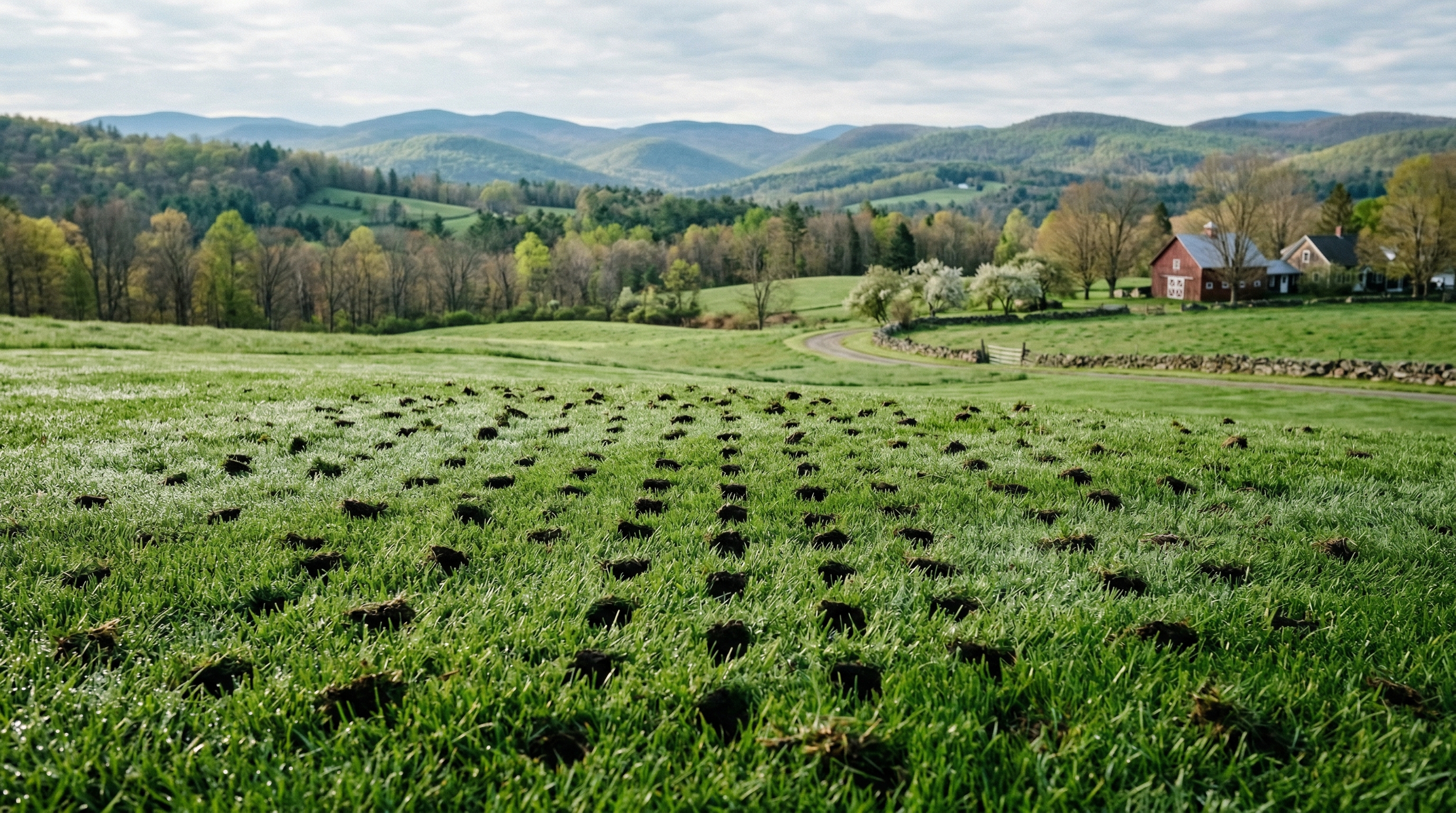
We use a core aerator: a machine that pulls small plugs of soil out of the ground, about 2-3 inches deep and half an inch wide. It leaves little cylinders of dirt scattered across the lawn. They look messy for a few days but break down within a week or two.
Don't rake them up. Those plugs break apart and filter back into the lawn, adding organic matter right where it's needed.
The whole process takes a couple hours for an average residential property. We mow the lawn short beforehand, about 2 inches, and flag sprinkler heads and shallow utility lines so we don't hit them.
What Does Aeration Cost in Vermont?
For a standard residential lawn in Rutland County, say a quarter acre of actual turf, you're looking at $150 to $250 for core aeration. Add overseeding and it's usually $300 to $450 total depending on the seed blend.
You can rent an aerator from a hardware store for $75-100 a day, but those consumer-grade machines are lighter and don't penetrate as well, especially in compacted clay. They also beat you up physically. We run commercial-grade equipment that weighs three times as much and pulls deeper cores.
For what it costs, aeration is the single best return on investment for a struggling lawn. Better than fertilizer alone. Better than watering more. You're solving the root cause, literally, instead of treating symptoms.
If your lawn's been looking tired despite doing everything else right, give us a call. We've been doing this in Rutland County since 2009, and we can usually tell you within five minutes whether aeration will make the difference.